


The Class 10 board examinations are approaching, and students are working hard to achieve good marks. However, once the results are announced, another important decision awaits them: choosing the right stream and school for Classes 11 and 12.
For some students, this may mean continuing in their current school, while others may consider changing schools to find better academic support, facilities, or opportunities for their chosen stream. The right decision can be different for every student because their interests, academic strengths, future plans, and expectations are not the same.
If you are a parent or student exploring schools in Rohtak for Class 11 admissions, this blog will help you understand how to choose the right stream after Class 10 and what to look for when selecting a school for the next two years.
How to Choose the Right Stream After Class 10
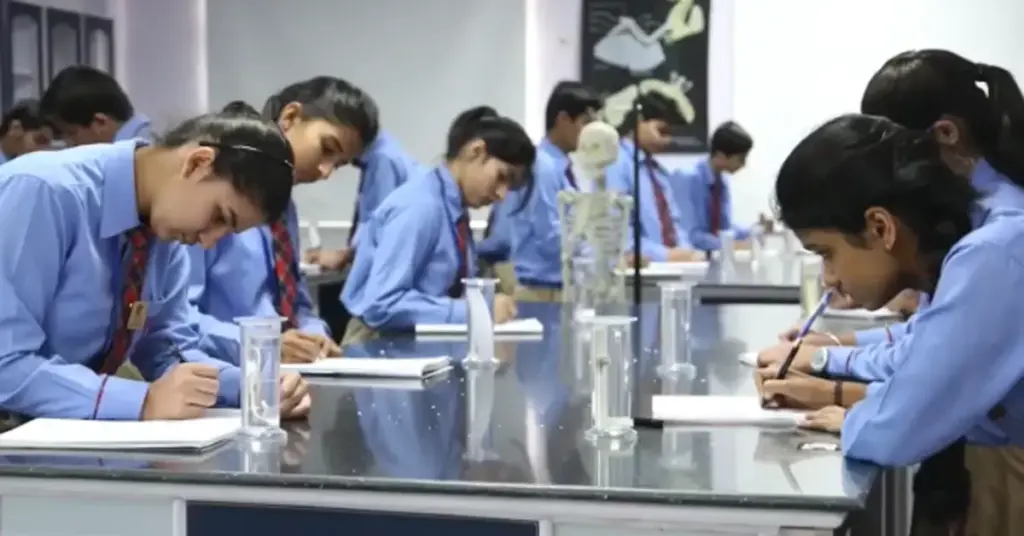
Choosing a stream after Class 10 is an important decision because it influences the subjects students study in Classes 11 and 12 and the higher education options available to them. Students should therefore take their time, understand their options, and make a decision based on their interests and abilities rather than rushing into a choice.
1) Understand Your Interests and Strengths
The first step is to understand which subjects you enjoy and where your strengths lie. Students who enjoy Mathematics and scientific concepts may consider Science, while those interested in business, finance, economics, and accounting may explore Commerce. Students interested in subjects such as history, political science, psychology, and society may find Humanities more suitable.
These are general guidelines, not fixed rules. Students should explore the subjects offered under each stream and understand what studying them involves before making a final decision.
2) Don’t Choose a Stream Just Because Your Friends Are Choosing It
Many students feel comfortable choosing the same stream as their friends. Others select a stream because they believe it is easier than the alternatives or because their parents expect them to pursue a particular career.
However, a stream that suits one student may not be the right choice for another. Students should think about the subjects they are willing to study consistently for the next two years and the opportunities they want to explore afterwards.
Parents can help by discussing the available options, answering questions, and pointing out their child’s strengths. The final decision should be based on a realistic understanding of the student’s interests, academic preparation, and future goals.
3) Consider Future Career and Higher Education Options
Students do not need to decide their entire career at the age of 15 or 16, but they should understand how different streams connect with higher education and professional courses.
For example, students considering engineering or many science-related courses should check the relevant subject requirements. Those interested in accounting, finance, business, law, design, social sciences, or other fields should also research the qualifications and entrance requirements for their preferred courses.
It is useful to shortlist a few possible career paths and check which subjects are required for admission to the relevant colleges or programmes. This helps students make an informed choice without feeling that they must have their entire future planned already.
4) Be Realistic About Academic Preparation
Students should also consider their current understanding of the subjects they want to study. A student interested in Science, for example, should understand the demands of Physics, Chemistry, Mathematics, or Biology, depending on the combination they choose.
Marks in Class 10 can help students identify areas where they may need additional support, but marks alone should not determine their future. A student with lower marks may improve with the right guidance and consistent effort, while a student with high marks still needs to choose subjects that match their interests and goals.
Parents should discuss any learning gaps with their child and teachers before deciding. They should also check the school’s subject eligibility criteria rather than assuming that admission to a particular stream automatically means the student is prepared for its academic demands.
How to Choose the Best School in Rohtak for 11th and 12th Classes

Once students have a clearer idea of the stream they want to pursue, the next step is to find a school that can support their academic goals. When comparing schools, parents should look beyond advertisements and consider the quality of teaching, academic support, facilities, fees, and opportunities available to students.
1. Check the School’s Previous Board Results
Board results can help parents understand a school’s academic performance. Look at the overall results for Classes 10 and 12, the number of students who performed well, and the consistency of results over several years.
Rather than focusing only on the highest percentage achieved by one student, try to understand how the school supports students with different academic abilities. Consistent performance, proper guidance, and improvement across the student group can provide a more useful picture of the school’s academic approach.
2. Find Out About the Teachers’ Experience
Teachers play a major role in helping students understand subjects that become more demanding in Classes 11 and 12.
Ask about the experience and subject expertise of the teachers who will teach your chosen stream. It is also worth understanding how they explain difficult concepts, monitor student progress, and help students who need additional guidance.
Experienced teachers who are approachable and willing to clear doubts can make a significant difference, particularly when students begin studying advanced topics.
3. Understand the Fees and Other Expenses
Before taking admission, ask for a clear breakdown of the school’s fees. Apart from tuition fees, check whether there are additional charges for examinations, laboratory use, transport, activities, or other services.
Parents should compare the overall cost with the academic support and facilities the school provides. The aim should be to find a school that meets the student’s needs and fits the family’s budget without making the decision on fees alone.
4. Check the Facilities Available for Your Stream
Facilities matter because students need suitable resources to understand and practise what they learn.
Science students may need well-equipped laboratories, while students across streams can benefit from libraries, computer facilities, smart classrooms, and spaces for practical learning. Ask whether students regularly use these facilities as part of their lessons rather than simply having access to them on campus.
A school should provide the resources needed for the subjects it offers and maintain them properly.
5. Look at Extracurricular Activities
Classes 11 and 12 are academically demanding, but students also need opportunities to pursue interests outside the classroom.
Check whether the school offers sports, clubs, cultural activities, debates, creative programmes, or other opportunities that students can participate in alongside their studies. These activities help students develop communication, teamwork, time management, and other skills that are useful beyond examinations.
The school should also help students manage their schedules so that participation in activities does not become difficult to balance with academic responsibilities.
6. Understand the Teaching Approach and Academic Support
Completing the syllabus is only one part of preparing students for board examinations. Students also need clear explanations, regular assessments, revision, practice questions, and support when they struggle with a topic.
Ask how often students are assessed, how teachers identify learning gaps, and whether doubt-clearing sessions or additional academic support are available. You should also understand how the school prepares students for the examination pattern and helps them improve their answer-writing and time-management skills.
7. Learn About the School’s Alumni and Career Guidance
A school’s alumni can give parents an idea of the different paths students have taken after completing their education. Where possible, find out about former students’ higher education choices and the guidance they received during Classes 11 and 12.
Also check whether the school provides career counselling, information about college admissions, guidance on subject choices, or sessions that introduce students to different career options. This can be especially helpful for students who are still exploring what they want to pursue after Class 12.
8. Visit the Campus and Speak to the School
A campus visit helps parents and students understand the school beyond its website or admission brochure.
Meet the teachers or academic coordinators, ask questions about your chosen stream, see the classrooms and laboratories, and understand the school’s approach to academic support. If possible, speak with current parents or students to learn about their experiences.
Most importantly, make sure the school offers the subjects you want to study and that you feel comfortable with its teaching approach, facilities, expectations, and overall environment.
Why Consider Scholars Rosary Senior Secondary School for Class 11 Admissions?
At Scholars Rosary Senior Secondary School, we understand that Classes 11 and 12 are important years for students as they prepare for board examinations, explore career options, and make decisions about higher education. Our focus is on helping students strengthen their subject knowledge while receiving the guidance they need to plan their next steps.
Our academic approach combines structured CBSE curriculum delivery with regular assessments, practical learning, and teacher guidance. Students have access to facilities such as smart classrooms, Science and Mathematics laboratories, computer labs, Robotics, VR, and other specialised learning spaces that support classroom teaching and practical understanding.
We also recognise that students may need different kinds of support during these two years. Regular assessments help teachers identify areas that need attention, while guidance and doubt-clearing opportunities help students work through difficult concepts. Our aim is to help students develop a sound understanding of their subjects and prepare systematically for their board examinations.
Beyond academics, students can explore sports, clubs, creative activities, and other opportunities that help them develop skills outside the classroom. We also provide college and career guidance to help students understand their options after Class 12 and make informed decisions about higher education.
For students and parents searching for the Best School in Rohtak for 11th and 12th, we encourage them to visit Scholars Rosary Senior Secondary School, understand the available subject combinations, speak with our team, and see whether our academic approach and facilities match their needs.
Conclusion
Choosing the right stream and school after Class 10 requires careful thought. Students should consider their interests, academic strengths, future options, and willingness to study particular subjects before making a decision. Parents can support them by discussing these factors openly and helping them research the available choices.
When comparing schools in Rohtak, look at previous board results, teacher experience, academic support, facilities, fees, extracurricular activities, and career guidance. A school should not only help students prepare for examinations but also give them the knowledge and support needed to make informed decisions about their future.
At Scholars Rosary Senior Secondary School, we aim to provide students with the academic guidance, learning resources, and opportunities they need during Classes 11 and 12. Taking the time to explore your options and visit the campus can help you decide whether our school is the right fit for your next stage of education.
Frequently Asked Questions
1. How should students choose the right stream after Class 10 in Rohtak?
Students should consider their interests, academic strengths, and future education or career goals before choosing a stream. Science, Commerce, and Humanities offer different subject combinations and opportunities. Students should explore these options, understand the subjects involved, and seek guidance from parents and teachers before making a decision.
2. Which streams are generally available for Class 11 students?
The three main streams generally offered in Class 11 are Science, Commerce, and Humanities. Science may include Physics, Chemistry, Mathematics, or Biology, while Commerce focuses on subjects such as Accountancy, Business Studies, and Economics. Humanities may include History, Political Science, Psychology, and other subjects. Students should check the subject combinations available at individual schools in Rohtak before applying for admission.
3. How can students decide between Science, Commerce, and Humanities?
Students should compare the subjects offered under each stream with their interests, strengths, and future plans. Science may suit students interested in scientific and technical fields, Commerce may appeal to those interested in business and finance, and Humanities may be suitable for students interested in society, history, psychology, or public policy. Students should also research the subject requirements for their preferred college courses before deciding.
4. Should students choose a stream based only on their Class 10 marks?
No. Class 10 marks can help students understand their academic strengths, but they should not be the only factor in choosing a stream. Students should also consider their interests, willingness to study particular subjects, and future goals. Parents should help them make a realistic decision while checking the school’s eligibility criteria for their preferred stream.
5. How important are laboratories and practical facilities for Class 11 Science students?
Laboratories and practical facilities are important because they help Science students connect theoretical concepts with real-world applications. Well-maintained Physics, Chemistry, and Biology laboratories, where applicable, allow students to conduct experiments and develop practical skills. When comparing schools in Rohtak, parents should check whether students regularly use these facilities as part of their learning.
6. Should parents consider career counselling when selecting a Class 11 school?
Yes. Career counselling can help students understand higher education options, entrance requirements, and possible career paths after Class 12. Parents looking for the Best School in Rohtak for 11th and 12th should check whether the school offers career guidance, subject selection support, and information about college admissions. This support can help students make informed decisions about their future.
7. What should parents look for when choosing the Best School in Rohtak for 11th and 12th?
Parents should compare academic results, experienced subject teachers, available subject combinations, laboratory facilities, regular assessments, and board examination preparation. They should also consider fees, extracurricular activities, and career guidance. Visiting the campus and speaking with the school’s academic team can help families decide whether the school meets their child’s needs.
8. How can students find the right school for Class 11 admissions in Rohtak?
Students and parents should shortlist schools based on their preferred stream, subject availability, teaching quality, academic support, and facilities. They should also review previous board results, understand the fee structure, and visit the campus before making a decision. Comparing these factors can help families identify suitable schools in Rohtak for Classes 11 and 12.
9. Is choosing a primary school and choosing a senior secondary school different?
Yes. When looking for the Best Primary School in Rohtak, parents generally focus on foundational learning, individual attention, age-appropriate teaching, and a supportive environment. For a senior secondary school, the priorities shift towards subject expertise, stream options, board examination preparation, practical facilities, and career guidance. The right choice depends on the child’s current educational stage and future needs.