

Completing Class 10 is an important milestone for students. After the board examinations and results, students face two major decisions: which stream to choose and which school to attend for Classes 11 and 12. These decisions can influence their higher education options, career opportunities, and the subjects they study over the next two years.
With Science, Commerce, and Humanities offering different academic and professional pathways, choosing the right stream can sometimes feel confusing. Students may have their own interests, while parents may have different expectations based on their experience and understanding.
The best approach is to consider your interests, academic performance, future goals, and advice from people who understand you. Here are some important things students and parents should consider before making this decision.
How to Choose the Right Stream After Class 10

1. Start by Understanding Your Interests
Before selecting a stream, think about the subjects you genuinely enjoy studying. Ask yourself which topics make you curious, which subjects you find interesting, and what kind of work you would like to do in the future.
For example, if you are interested in medicine and want to become a doctor, Science with Biology is generally the relevant pathway. If you enjoy business, accounting, finance, or entrepreneurship, Commerce may be a suitable choice. Students interested in physics, mathematics, or engineering may consider Science with Mathematics. Similarly, if you enjoy literature, history, politics, psychology, or creative writing and want to pursue a career such as a screenwriter or journalist, Humanities may offer relevant subject options.
These are only examples, and career paths can sometimes involve different combinations of subjects. The important thing is to understand what each stream offers and how it connects with your interests.
2. Consider Your Class 10 Board Examination Results
Your Class 10 results can help you understand your academic strengths and identify the subjects in which you perform well. If you have scored good marks, you may have more options to explore, depending on the eligibility criteria of the school and the subjects you want to study.
However, do not make your entire decision based on marks alone. A student may score well in Science but have a stronger interest in Commerce or Humanities. Similarly, finding a subject difficult does not necessarily mean you cannot improve with proper guidance and consistent effort.
Look at your subject-wise performance, understand your strengths, and consider whether you are prepared to study your chosen subjects in greater depth.
3. Do Not Choose a Stream Just Because Your Friends Are Choosing It
One common mistake students make is selecting a stream because their friends have chosen it. Having friends in the same class can make the transition to a new academic stage feel easier, but it should not determine your educational choices.
Your friends may have different interests, academic strengths, and career ambitions. A stream that suits them may not be the right choice for you.
Instead of following the same path, think about what you want to learn and where you see yourself in the future. You will be studying these subjects for the next two years and may continue with them during higher education. Therefore, your decision should reflect your own interests and goals.
4. Think About Your Future Academic and Professional Goals
You do not need to have your entire career planned at the age of 15 or 16. However, having an idea of the fields that interest you can make choosing a stream easier.
Think about the kind of higher education you may want to pursue and the professions you find interesting.
For example:
- Science with Biology: Medicine, biotechnology, life sciences, and related fields.
- Science with Mathematics: Engineering, physics, mathematics, architecture, and technology-related fields.
- Commerce: Accounting, finance, business management, economics, and entrepreneurship.
- Humanities: Law, journalism, psychology, literature, history, public policy, and creative professions.
Before making a decision, research the eligibility requirements for the courses and careers that interest you. Some professional programmes require students to study particular subjects in Classes 11 and 12. This will help you avoid choosing a stream without understanding the academic opportunities it offers.
5. Ask Yourself Why You Want to Choose a Particular Stream
Once you have shortlisted your options, take some time to think about your reasons. Do you genuinely enjoy the subjects? Are you interested in studying them in greater depth? Do they connect with your future academic or professional goals? Are you prepared for the kind of effort and commitment they will require?
These questions can help you distinguish between a decision based on genuine interest and one influenced by pressure, assumptions, or other people’s expectations.
For example, do not choose Science simply because people consider it more prestigious, or Commerce because you assume it is easier. Every stream requires effort, and each offers different opportunities. The right choice is the one that matches your abilities, interests, and ambitions.
Why Parents Should Be Part of the Stream Selection Decision
Students should have an important role in deciding what they want to study, but that does not mean they should make this decision without guidance.
There is a popular idea that children should decide everything about their future independently and that parents should not influence their choices. While students should certainly have the freedom to express their interests and ambitions, completely ignoring parental advice is not always a sensible approach.
Parents, grandparents, and older siblings often understand a child’s strengths, weaknesses, habits, and personality through years of experience. They may also have a broader understanding of educational opportunities, professional expectations, and the practical challenges associated with different career paths.
Sometimes, they may recognise abilities or weaknesses that students have not yet noticed themselves.
This does not mean parents should impose their own career ambitions on their children. Instead, they should help them evaluate their options, understand the consequences of different choices, and identify a path that matches their interests and abilities.
Students should listen to their parents, ask questions, discuss their doubts, and consider their advice before making a final decision. A conversation between parents and children can often lead to a more thoughtful decision than making a choice under pressure.
How to Choose the Right School for Classes 11 and 12
Once you have selected a stream, the next step is finding a school that can support your academic goals. The quality of teaching, subject expertise, learning facilities, and academic guidance can make a significant difference during senior secondary education.
Here are some factors students and parents should consider when comparing schools.
1. Check Whether the School Offers Your Preferred Subjects
Not every school offers the same subject combinations. Before applying, check whether the school provides the subjects you want to study in Classes 11 and 12.
For example, students interested in Science should understand the available combinations involving Physics, Chemistry, Mathematics, and Biology. Commerce and Humanities students should also check the available subject options.
It is better to confirm these details directly with the admissions team rather than assuming that every school offers all combinations.
2. Understand the Qualifications and Experience of Teachers
Senior secondary subjects involve more detailed concepts and require teachers who have a strong understanding of their respective subjects.
Parents should ask about the qualifications and experience of the faculty members teaching Classes 11 and 12. It is also important to understand how teachers explain difficult topics, conduct assessments, clear doubts, and help students prepare for board examinations.
Experienced teachers who can connect classroom concepts with practical examples can make learning easier and more meaningful.
3. Look at the Academic Facilities
Students in Classes 11 and 12 need access to suitable learning facilities, particularly when studying subjects that involve practical work.
Science laboratories, Mathematics laboratories, Computer labs, libraries, smart classrooms, and other subject-specific facilities can support classroom teaching and help students develop a better understanding of their subjects.
Parents should also check whether students regularly use these facilities as part of their academic learning.
4. Understand the School’s Approach to Board Examination Preparation
Classes 11 and 12 require consistent academic effort. Students need to understand concepts, complete their syllabus, revise regularly, and practise answering different types of questions.
Ask how the school monitors academic progress, conducts regular assessments, provides revision sessions, and supports students who need additional help.
A structured academic approach can help students identify their weaknesses early and prepare more effectively for their board examinations.
5. Check Career Guidance and Higher Education Support
Choosing a stream is only the beginning. Students also need to understand the courses, colleges, entrance examinations, and career options available after Class 12.
Look for a school that helps students explore different academic pathways and make informed decisions about higher education. Career guidance, information about college admissions, and discussions about professional opportunities can help students plan their next steps.
Why Consider Scholars Rosary Senior Secondary School for Classes 11 and 12?

At Scholars Rosary Senior Secondary School, we understand that Classes 11 and 12 are important years in a student’s academic journey. Students begin studying their chosen subjects in greater depth while preparing for board examinations and planning their future education.
Our aim is to provide an academic environment where students receive subject guidance, access suitable learning facilities, and get opportunities to explore their interests beyond regular classroom lessons.
Academic Learning and Subject-Specific Facilities
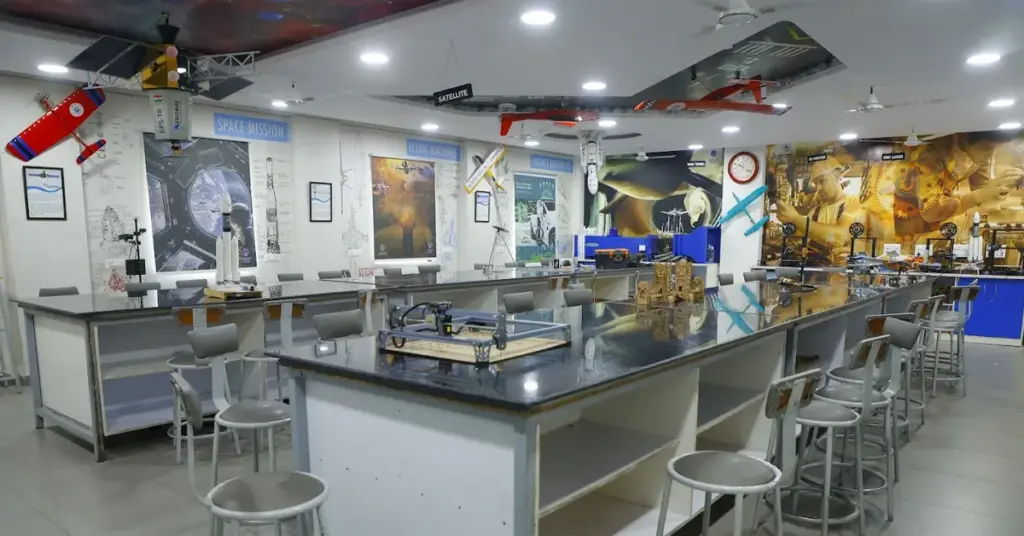
Our learning environment includes smart classrooms, Science and Mathematics laboratories, Computer facilities, Robotics, Virtual Reality (VR), and libraries. These facilities complement classroom teaching and provide students with opportunities to explore concepts through practical and visual learning.
We also focus on regular assessments, revision, and teacher guidance to help students understand their academic progress and prepare for their examinations.
Opportunities Beyond Academics
We believe senior secondary students should also have opportunities to participate in activities outside their regular subjects. Our campus offers sports and other activities that help students develop teamwork, discipline, confidence, and time-management skills.
These experiences allow students to explore different interests while maintaining their academic responsibilities.
Alumni and Their Higher Education Journeys
We are proud of the different paths our former students have taken after completing their education at Scholars Rosary.
Our alumni have pursued higher education at institutions such as IIT Delhi, IIM Indore, the University of Delhi, the University of Liverpool, and BITS Pilani. Others have entered professional fields such as consulting, data analysis, economic analysis, and management. Our wider alumni network also includes professionals working across technology, engineering, medicine, and other fields.
These journeys reflect the different opportunities students can pursue after school. We want our students to build strong academic foundations, understand their interests, and prepare for the higher education and career paths they wish to follow.
For parents looking for Schools in Rohtak Haryana for their children’s senior secondary education, we encourage them to explore our campus, understand the available subject combinations, and speak with our team about academic support and admission requirements.
Conclusion
Choosing the right stream and school after Class 10 requires careful thought. Students should consider their interests, academic performance, future goals, and the subjects they genuinely want to study. They should also take advice from their parents and other trusted family members before making a final decision.
Once the stream is selected, finding a school with experienced teachers, suitable academic facilities, regular assessments, and guidance for higher education becomes equally important.
At Scholars Rosary Senior Secondary School, we aim to provide students with the learning environment and academic support they need during Classes 11 and 12. If you are exploring the Best senior secondary School in Rohtak for the 2027-28 academic session, we invite you to visit our campus, discuss the available subject combinations, and understand how we can support your child’s next stage of education.
Frequently Asked Questions About Choosing a Stream After Class 10
1. How should students decide which stream to choose after Class 10?
Students should consider their interests, subject-wise performance, strengths, and future academic or career goals. They should understand the subjects offered in Science, Commerce, and Humanities and choose a stream they genuinely want to study rather than following their friends or external expectations.
2. Which stream is best after Class 10 for students who are unsure about their career goals?
There is no single best stream for students who are unsure about their careers. They should identify the subjects they enjoy, understand the opportunities each stream offers, and consider their academic strengths. Taking advice from parents, teachers, and career counsellors can also help them make a suitable choice.
3. How can parents help their children select the right academic stream?
Parents can help by understanding their child’s interests, academic strengths, and areas where they may need support. They should discuss different career options, explain the opportunities associated with each stream, and share their experience without imposing their own expectations. This allows students to make a more informed decision.
4. What factors should students consider when choosing a school for Class 11?
Students should check whether the school offers their preferred subject combinations, experienced subject teachers, well-equipped laboratories, smart classrooms, and regular academic support. They should also consider board examination preparation, extracurricular opportunities, and career guidance before selecting a school.
5. Which stream offers better career opportunities: Science, Commerce, or Humanities?
All three streams offer good career opportunities, but they lead to different academic and professional pathways. Science can lead to careers in medicine, engineering, research, and technology. Commerce offers opportunities in finance, accounting, business, and management, while Humanities can lead to fields such as law, journalism, psychology, public policy, and literature. The right choice depends on a student’s interests, abilities, and career goals.
6. How important is career counselling when selecting a stream after Class 10?
Career counselling can help students understand their strengths, explore suitable career options, and learn about the subject requirements for different courses. It is particularly useful for students who are unsure about which stream to choose. Discussing these options with parents, teachers, and counsellors can help students make a more confident and informed decision.