

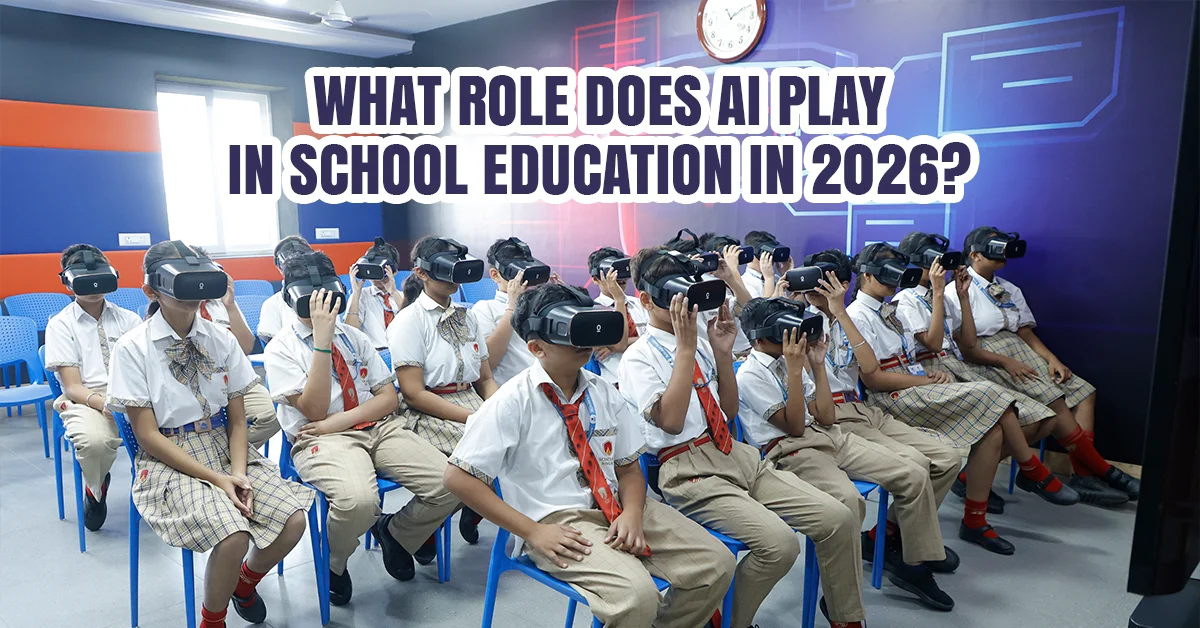
Artificial intelligence is no longer something that belongs only to the future. AI in education is already changing how students learn, practise, explore ideas, and interact with technology. The world in which today’s parents studied is very different from the world students are growing up in today. Technologies that were once considered advanced have become part of everyday life, while some professions and skills that once seemed like secure career choices are being transformed by automation and AI.
In this changing environment, learning about AI is becoming less like learning an optional skill such as playing an instrument or learning another language and more like learning how to use a computer. Students do not necessarily need to become AI developers, but they do need to understand what AI can do, how to use it responsibly, and when it should or should not be used. This is why AI is likely to play an increasingly important role in school education and in students’ lives.
How Can AI Change School Education?
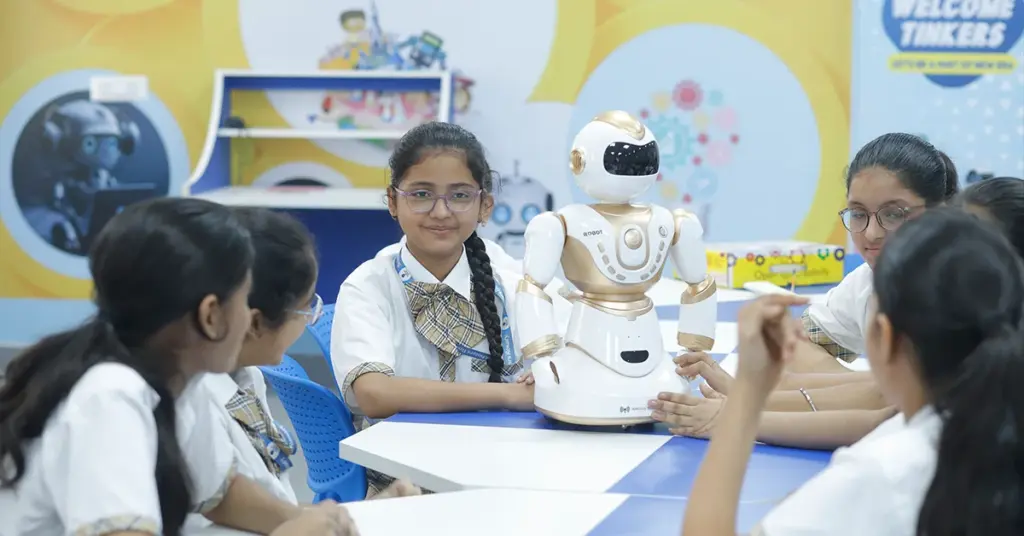
1) Personalised Learning
One of the biggest advantages of AI tools for students is that they can continue learning even after a classroom lesson has ended. If a student does not understand a concept, an AI tool can explain it in simpler language, provide examples, or approach the same topic from a different perspective.
This can be particularly useful when students are hesitant to ask the same question repeatedly in class. AI can provide an additional learning resource without replacing the teacher’s guidance.
2) Personalised Learning
Every student learns differently. Some understand a concept quickly, while others need more practice or a different explanation. AI can help students create personalised learning plans based on the subjects or topics they want to improve.
For example, a student preparing for an examination could use AI to organise a revision schedule, identify areas that need more practice, and generate questions for revision. The teacher can still remain responsible for the overall learning direction, while AI can provide additional support.
3) Understanding Complex Topics
AI tools can make difficult concepts easier to approach. Students can ask an AI assistant to explain a scientific concept step by step, provide an everyday example, or create a simple analogy.
Tools such as Google Gemini and other AI assistants can also help students practise what they have learned by generating quizzes, questions, flashcards, or problem-solving exercises.
The important lesson is not simply getting an answer. Students should learn to ask better questions, examine the response, identify mistakes, and verify information.
4) Supporting Projects and Creativity
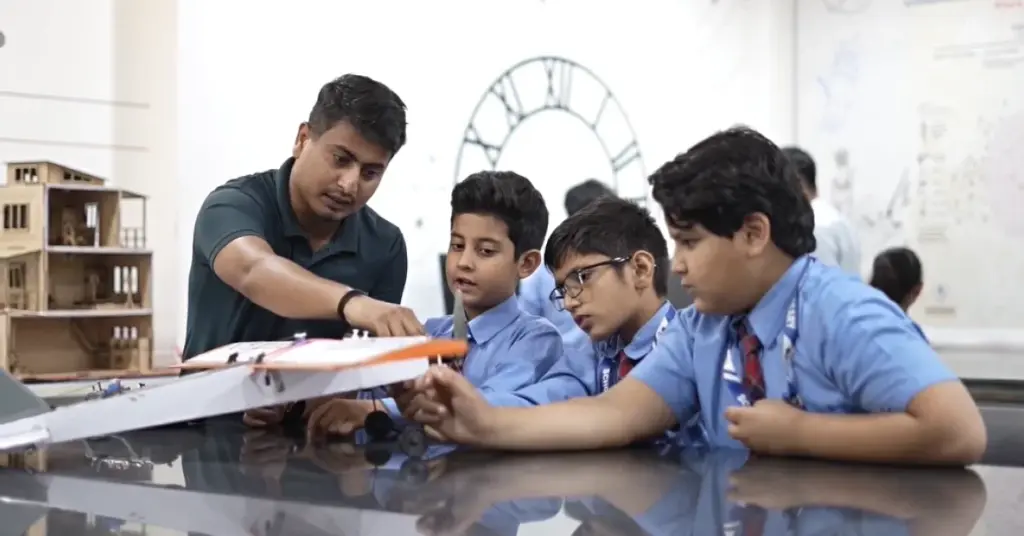
AI can become a useful brainstorming partner when students are working on projects. It can help generate ideas for a science experiment, suggest ways to present research, explain how a particular technology works, or assist with coding for a project.
For example, a student building a simple electronics or programming project could use AI to understand how the code works, identify an error, or explore different ways to solve a problem. This gives students an opportunity to experiment and learn through doing.
5) Developing AI Literacy
Perhaps the most important role of AI in education will be developing AI skills for students, including how to use different AI tools for different purposes.
An AI tool that is useful for writing may not be the best choice for research. Another may be better for creating images, analysing information, generating code, or working with data. Students who understand these differences will be better prepared for a world where AI becomes part of many professions.
AI education should therefore go beyond teaching students how to type a prompt. It should teach them how to choose the right tool, provide useful instructions, evaluate the output, protect their privacy, and use AI ethically.
The Other Side: Why AI Must Be Used Carefully
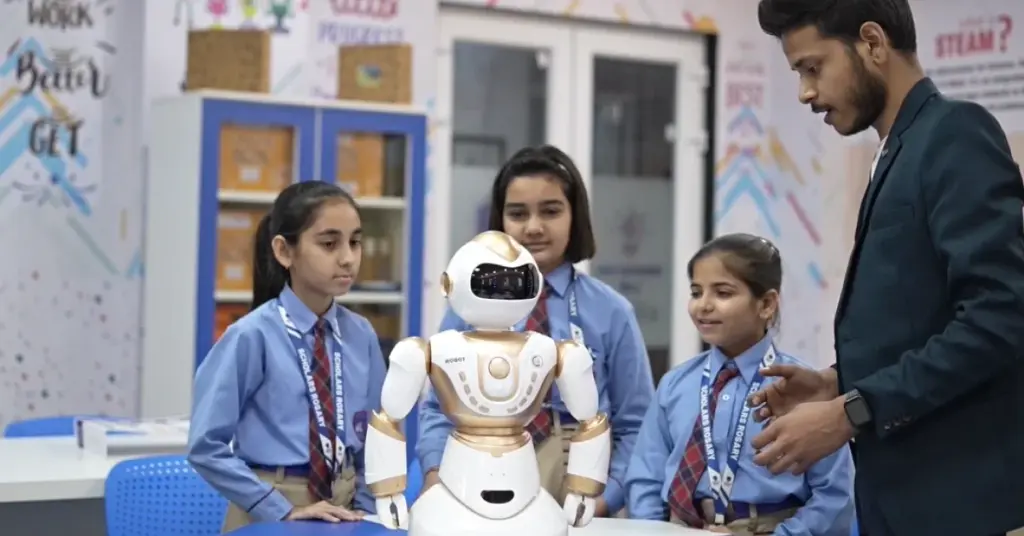
AI can make learning easier, but making everything easier is not always the same as making students better learners. The growing role of AI in school education also means that students need clear guidance on when and how these tools should be used.
One concern is overdependence. If students begin using AI to answer every question, write every assignment, summarise every chapter, and solve every problem, they may gradually lose the willingness to think through difficult tasks themselves.
We are already living in a world of short videos, constant notifications, and shortened attention spans. AI could unintentionally add another layer to this problem if students begin thinking, “Why should I read the chapter when AI can summarise it for me?”
The TL;DR approach can be useful when someone needs to quickly understand a long article or catch up on information online. But education cannot always work that way. Some things require patience, detailed reading, practice, mistakes, and sustained concentration.
There are also other concerns. AI can provide incorrect information, reproduce bias, and sometimes produce answers that sound convincing even when they are wrong. Students therefore need to learn that AI is a tool, not an unquestionable authority.
The goal should not be to keep AI away from students. It should be to teach them how to use it without allowing it to replace their own thinking.
How Scholars Rosary Senior Secondary School Sees AI in Education
At Scholars Rosary Senior Secondary School, one of the best senior secondary school in Rohtak, we understand that education must evolve with the world around our students. AI is becoming an important part of modern life, and preparing students for the future means helping them understand new technologies while keeping the fundamentals of learning firmly in place.
As a CBSE school in Rohtak, we believe students should be prepared for a changing world while developing the knowledge, discipline, and critical thinking skills they need to learn independently.
We believe technology should support learning, not replace it. Students still need to read, write, calculate, question, experiment, discuss ideas, solve problems, and develop their own understanding. AI can complement these activities by providing additional explanations, practice, ideas, and opportunities to explore subjects beyond the classroom.
As AI becomes more common in education, we see an opportunity to help students develop the right habits around it: curiosity without overdependence, experimentation with responsibility, and confidence in using technology alongside their own knowledge and judgement.
The aim is not simply to teach students how to use AI. It is to prepare them to become thoughtful learners who know when AI can help, when they need to think for themselves, and how to use technology responsibly.
Conclusion
AI will likely become a normal part of school education, just as computers, calculators, and the internet gradually became part of the learning environment. The important question is no longer whether students will encounter AI, but how well prepared they will be to use it.
Used properly, AI can give students new ways to learn, practise, explore ideas, solve problems, and create projects. Used without limits, it can encourage shortcuts and reduce the very skills education is meant to develop.
The future of education should therefore not be AI versus teachers or AI versus traditional learning. It should be about finding the right balance. Teachers provide experience, judgement, encouragement, context, and human understanding. AI can provide additional tools and possibilities.
The students who benefit most from AI will not necessarily be those who use it the most. They will be the future-ready students who know how to use technology wisely while continuing to think, question, learn, and create independently.